
Śrī Vidyā
The Goddess and the Nature of Reality
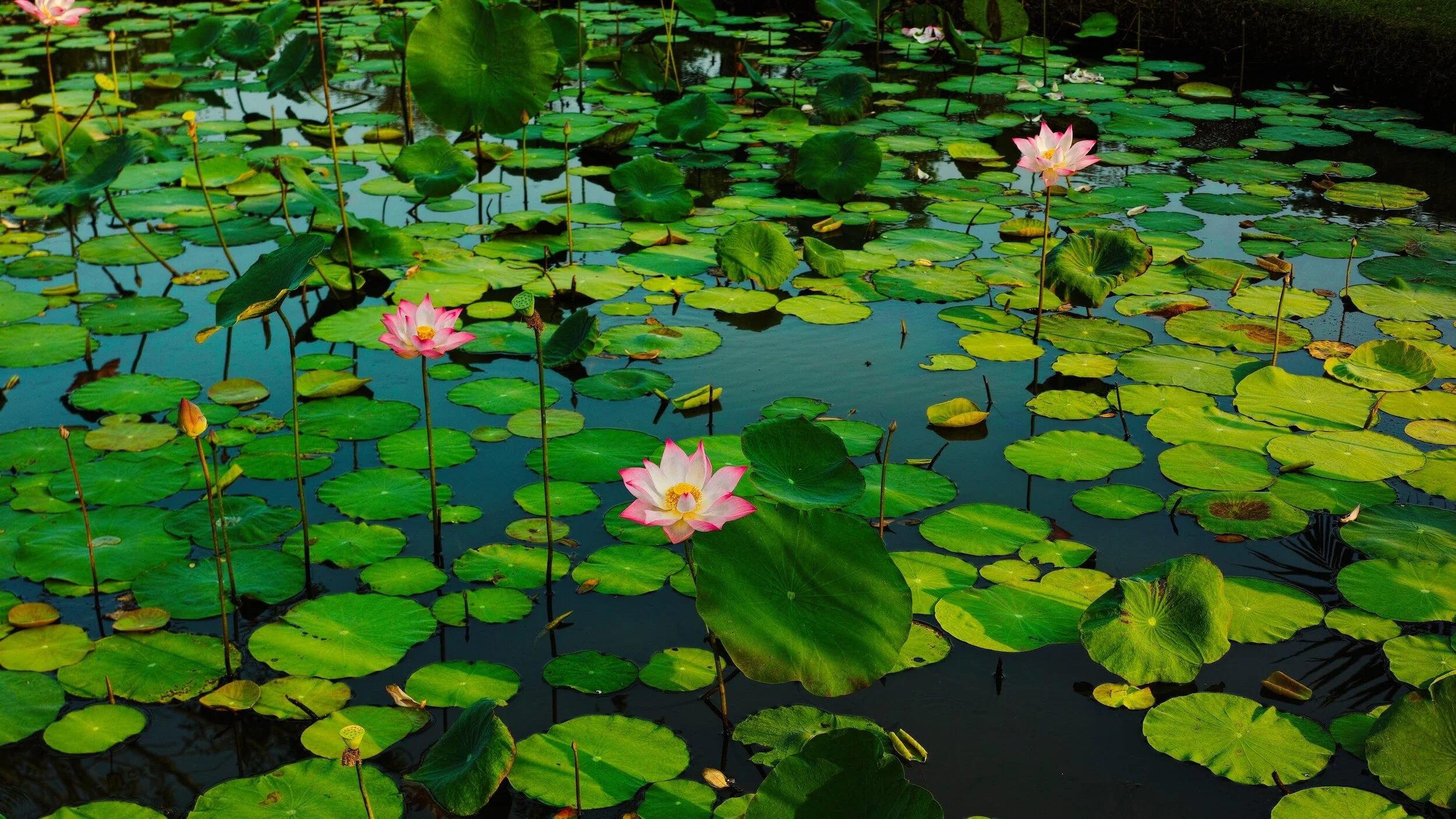
What does it mean to worship the Divine as Mother? And what happens to our understanding of ourselves and the world around us when we begin to explore the possibility that nothing exists outside of Her?
Śrī Vidyā is a sophisticated Tantric tradition within Sanātana Dharma centered on the worship and realization of the Divine Mother as Lalitā Tripura Sundarī.
It is a tradition of extraordinary beauty, philosophical depth, devotion and precision.
My relationship with these teachings continues to unfold through spiritual practice, the generosity of my teachers, devotion to Amma Sri Karunamayi and pilgrimage to places sacred to the Divine Mother.
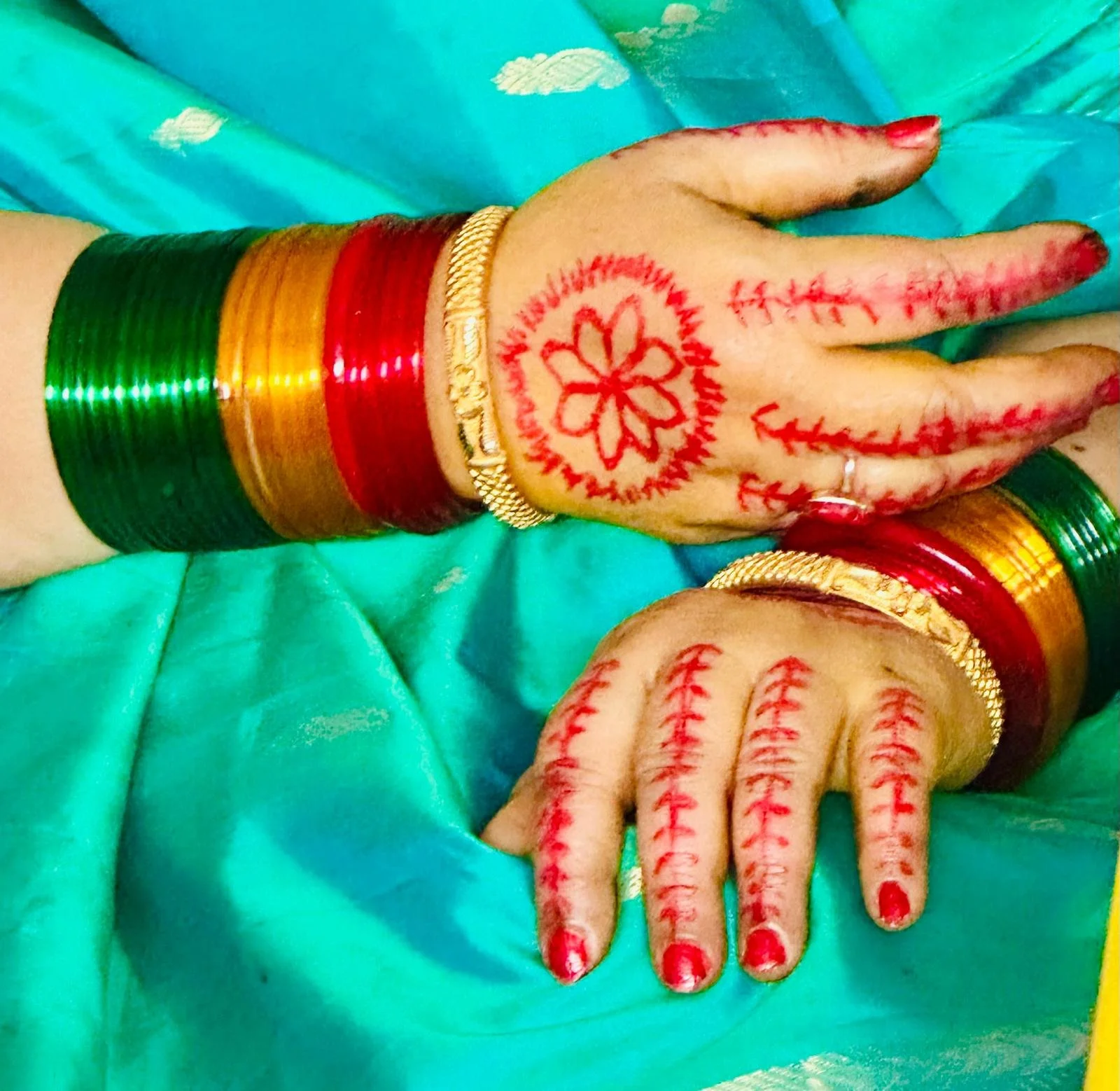
Lalitā Tripura Sundarī
Her name speaks of beauty, playfulness and the three worlds.
Within the Śrī Vidyā tradition, Lalitā Tripura Sundarī is revered as the Supreme Reality. She embodies the inseparability of Shiva and Shakti, consciousness and its creative power.
The entirety of existence is understood as an expression of the Divine.
This understanding has profound implications for how we experience life. What becomes of our perception of the ordinary when we begin to recognize the sacred within it?
Shakti: The Power of Existence
Shakti is the power through which existence manifests, sustains itself and dissolves.
She is present in the movement of the planets, the unfolding of a flower, the intelligence of the human body, the movement of breath and our very capacity to experience life.
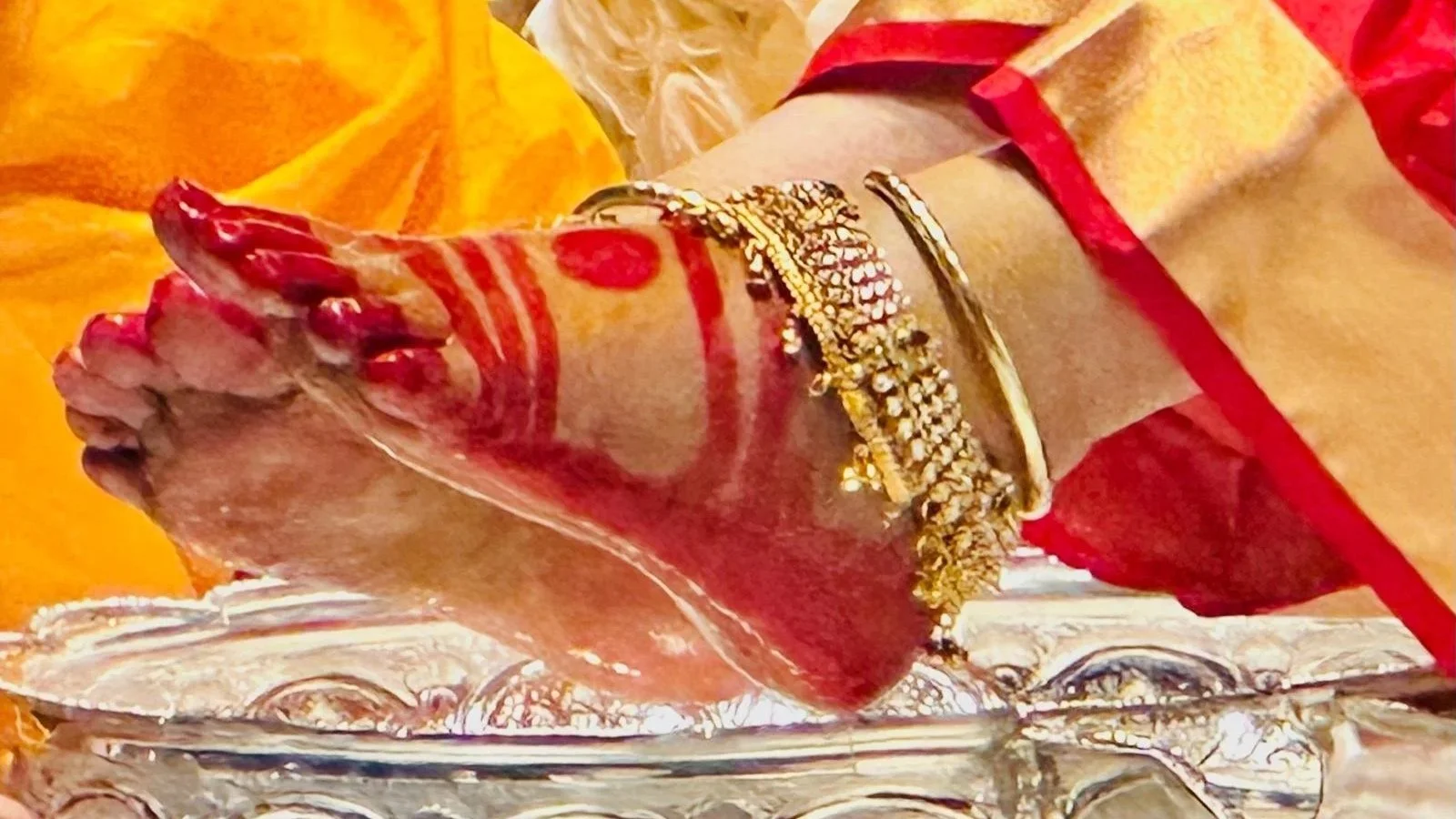
The worship of Shakti invites an exploration of the relationship between consciousness and manifestation, between the individual and the whole.
These teachings have increasingly informed the way I inhabit my own life. Tending my garden, feeding the birds, chanting, sitting in meditation and undertaking pilgrimage all offer opportunities to contemplate and experience my relationship with Her.
There is no shortage of opportunities to delight in the Mother.
The Śrī Chakra
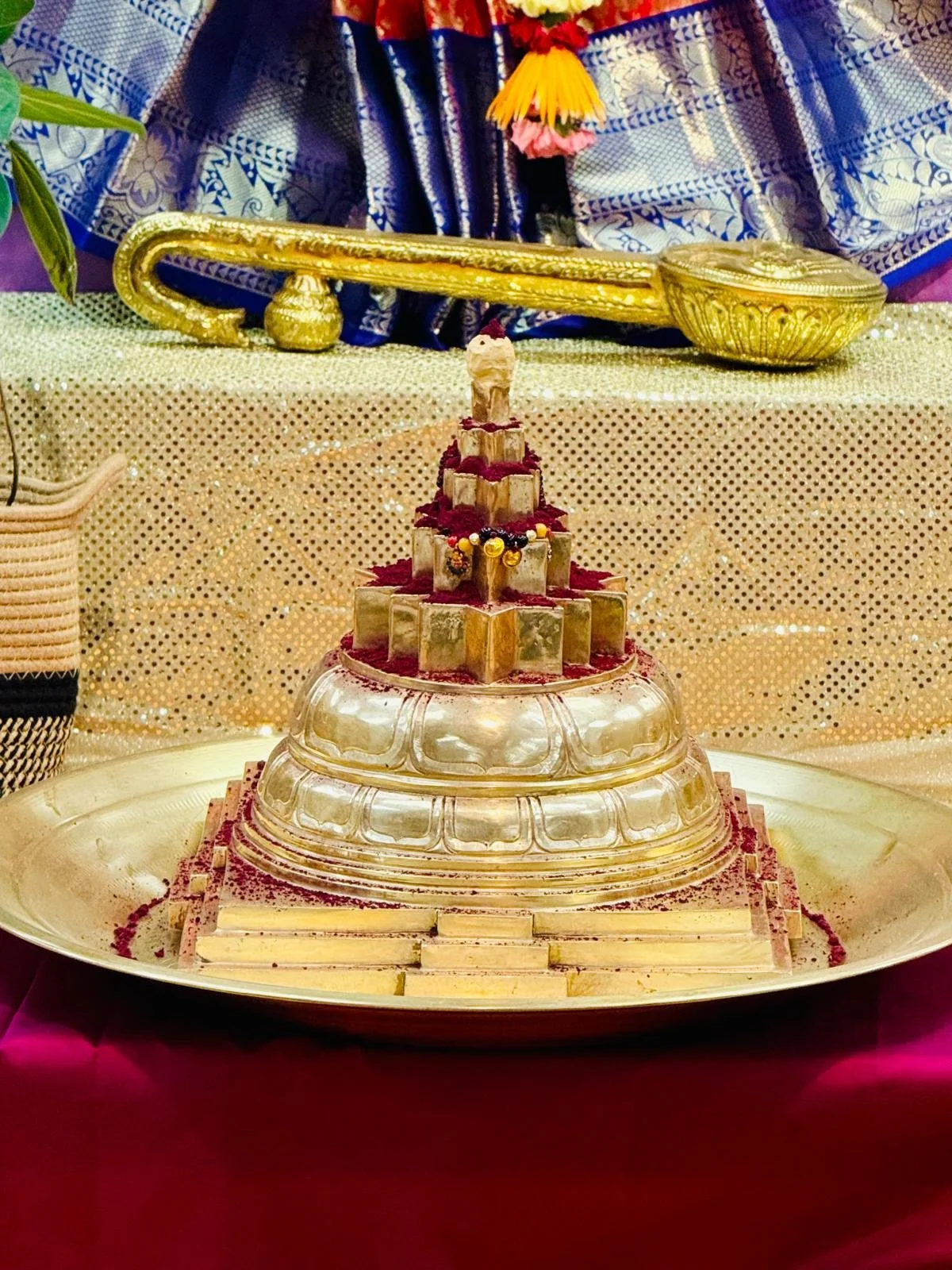
Among the most exquisite expressions of the Śrī Vidyā tradition is the Śrī Chakra, also known as the Śrī Yantra.
Its intricate geometry consists of nine interlocking triangles, forming forty-three smaller triangles arranged around a central point known as the bindu.
The Śrī Chakra embodies a sophisticated understanding of manifestation, consciousness and the relationship between the individual and the cosmos.
Its nine enclosures, or āvaraṇas, provide the framework for an elaborate tradition of worship and contemplation.
Within the Śrī Vidyā tradition, the Śrī Chakra is understood to exist within us. Its sacred geometry reflects the very principles of manifestation and consciousness that constitute our own existence.
The Bhāvanā Upaniṣad explores this profound correspondence between the human body and the Śrī Chakra.
The worship of the Śrī Chakra can therefore be both external and internal. Its contemplation invites us to explore the presence of the Divine Mother within our own being.
We are, ourselves, expressions of Her creative power. The recognition of this is central to the nondual understanding of Śrī Vidyā.
The more I learn about the Śrī Chakra, the more extraordinary I find it.
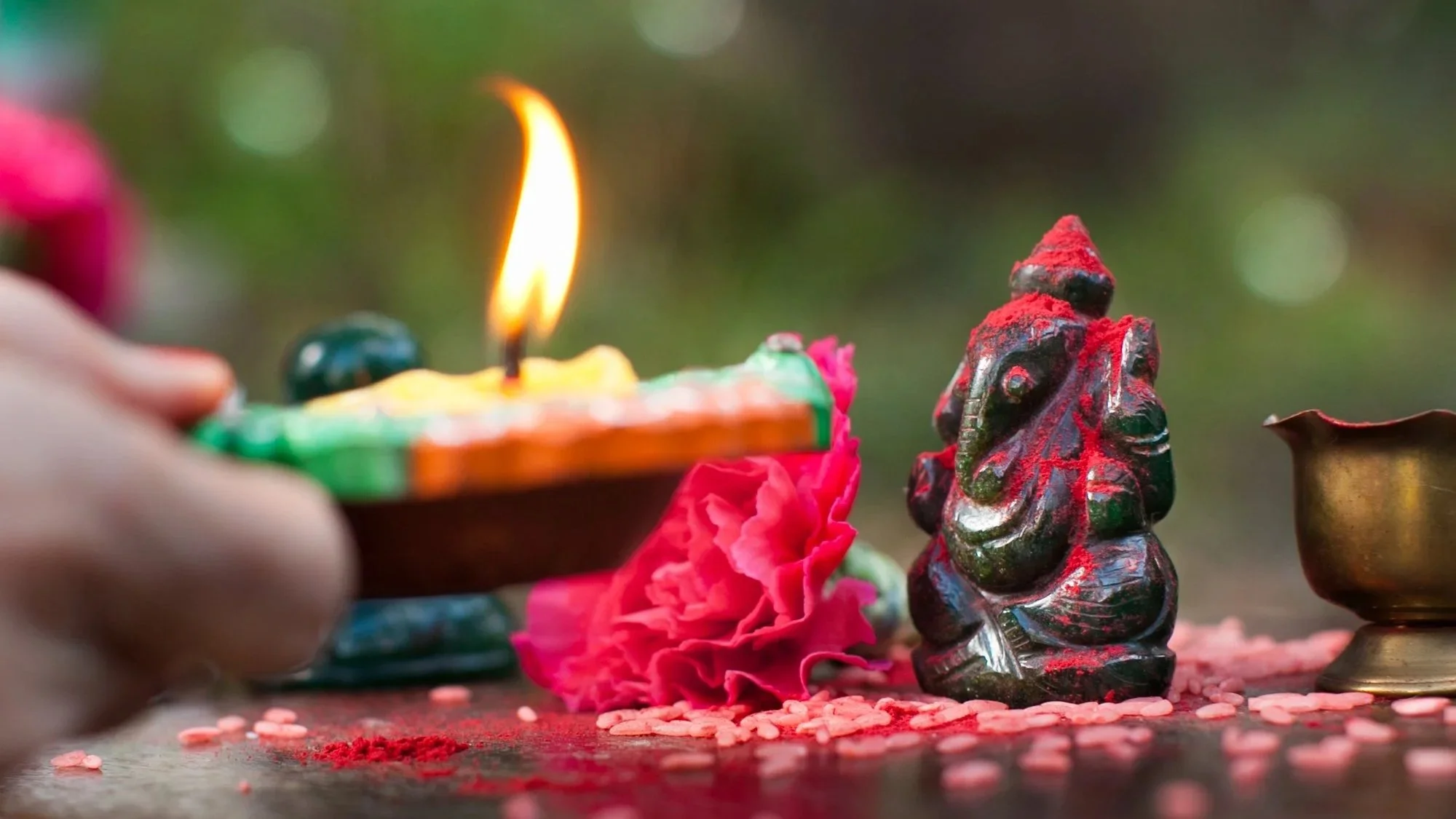
Ānanda — The Nature of the Divine Mother.
What do we understand bliss to be?
Within the Vedic traditions, the Sanskrit term ānanda conveys something considerably more profound than our ordinary experience of happiness.
Sat-Cit-Ānanda — existence, consciousness and bliss — describes the essential nature of ultimate reality.
In the Lalitā Sahasranāma, the Divine Mother is celebrated as Paramānandā, She who is supreme bliss, and Saccidānandarūpiṇī, She whose form is existence, consciousness and bliss.
We generally associate happiness with something we experience. We delight in beauty, in the company of someone we love, in music, in nature or in the fulfillment of a desire.
But consider the experience of deep, dreamless sleep.
The Māṇḍūkya Upaniṣad describes deep sleep as a state of bliss. The activities of the mind subside, our desires and concerns fall away, and yet we require nothing to be content. We enter this state regularly but ordinarily lose conscious awareness of it.
The practice of yoga nidra offers a fascinating opportunity to explore the relationship between deep rest and consciousness.
What if bliss is intrinsic to the very nature of our existence?
At the heart of the Śrī Chakra is Sarvānandamaya Chakra, the ninth āvaraṇa, the enclosure of all bliss, associated with the inseparability of Shiva and Shakti.
Within the nondual understanding of Śrī Vidyā, the Divine Mother is the fullness of existence itself. Nothing exists independently of Her.
The practices and teachings of yoga invite us to explore these extraordinary understandings through direct experience.
Śrī Vidyā encompasses mantra, yantra, ritual worship, meditation, philosophical inquiry and devotion.
These are living traditions, preserved and transmitted through generations of teachers and practitioners. Many of their practices require initiation and appropriate guidance within a lineage.
My devotion to the Divine Mother encompasses both Vedic and Tantric traditions. Śrī Sūktam, the Vedic hymn in praise of Lakṣmī Devī, was among the sacred chants I learned by heart early in my spiritual journey.
Particularly dear to me within the Śrī Vidyā tradition are the Lalitā Sahasranāma, the thousand names of the Divine Mother, and the Śrī Devī Khaḍgamālā Stotram.
Each offers an extraordinary opportunity for contemplation. Their richness extends far beyond the beauty of the Sanskrit itself.
My relationship with these practices continues to deepen, and I remain fascinated by the knowledge contained within them.


Pilgrimage and the Divine Mother
Some of my most meaningful experiences in India have been at places sacred to Shakti.
My experiences at Kamakhya and in Tripura, my study of the Śakti Pīṭhas and my growing fascination with Kamakshi in Kanchipuram have opened entire worlds of inquiry for me.
What I find extraordinary about the sacred geography of India is the depth of spiritual knowledge given physical expression through its temples, sacred landscapes, consecrations and traditions of worship.
The relationship between the human body, the cosmos and the Divine Mother is expressed in remarkable detail through temple architecture, sacred geometry, iconography, ritual and the sacred narratives associated with these places.
These are living traditions. The opportunity to participate in their worship, to chant in these sacred spaces and to experience their presence has profoundly influenced my understanding of Shakti and the nature of existence.
I look forward to sharing more of these discoveries through my writing and future pilgrimages.
Exploring the Sacred with Me
My devotion to the Divine Mother and my continuing study of Śrī Vidyā inform both my personal life and my approach to Vedic counseling.
I welcome sincere inquiry into the philosophical and devotional traditions of Sanātana Dharma, with deep respect for the sacred practices preserved and transmitted through their respective lineages.

A Life of Devotion
I am continually discovering how much there is to learn.
My reverence for the Divine Mother finds expression in my spiritual practice, my curiosity, my delight in the natural world and my willingness to examine my own life.
I have been extraordinarily fortunate to receive the teachings and blessings of remarkable teachers.
I bow to their feet and to the feet of my beloved Amma Sri Karunamayi.
Om Śrī Mātre Namaḥ.