I Have Gurus
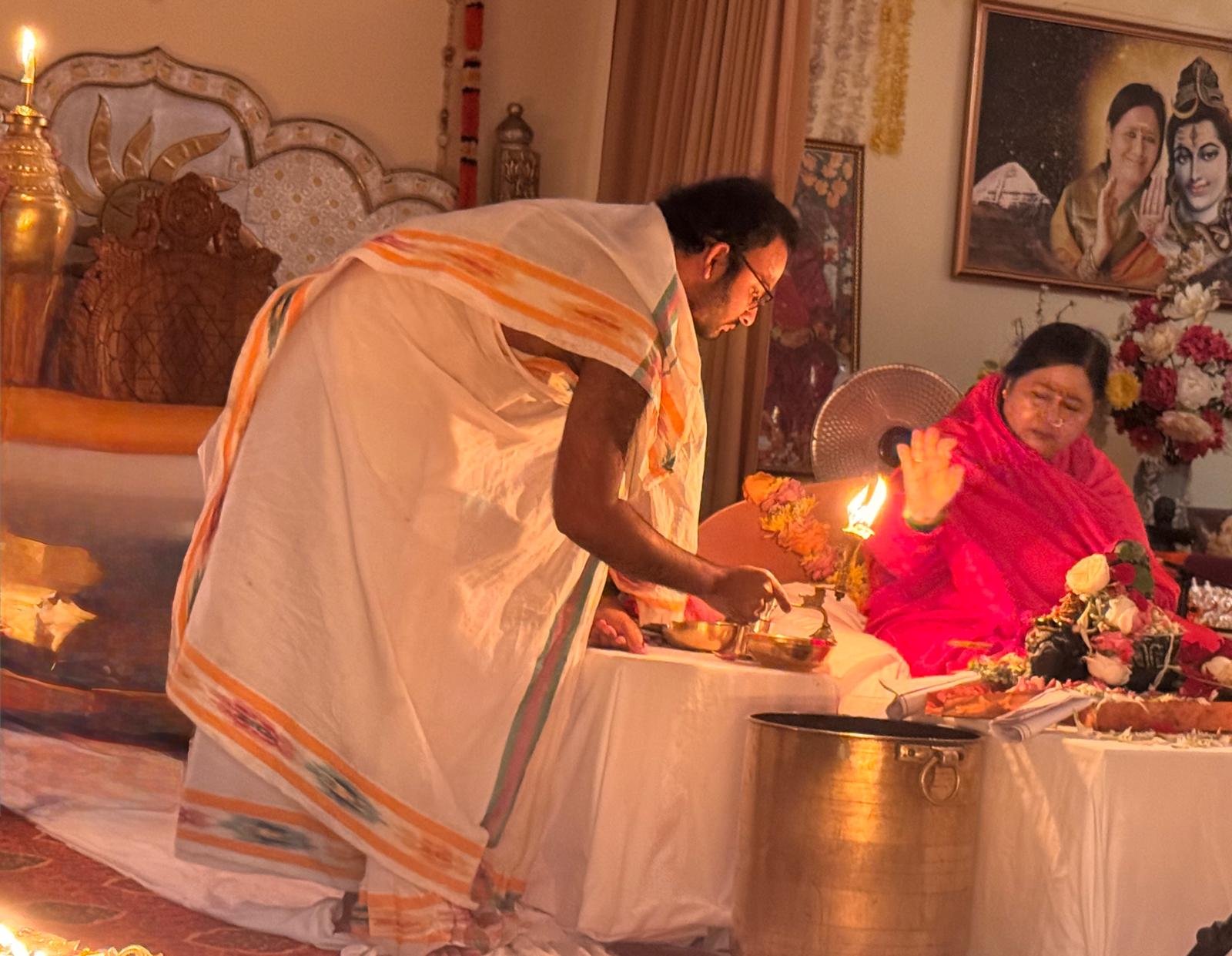
I have gurus.
That sentence alone will make some people uncomfortable.
I understand why.
We are living through a long overdue reckoning with spiritual authority. Teachers once considered untouchable have been accused of sexual abuse, coercion, financial exploitation, manipulation, deception, and worse. Institutions have protected teachers. Devotees have protected institutions. Spiritual teachings themselves have sometimes been used to convince people not to believe what they could plainly see.
But none of this is unique to gurus.
The Catholic Church alone should have cured us of that illusion. Abuse, institutional protection, secrecy, misplaced loyalty, and the exploitation of spiritual authority have crossed religious traditions, denominations, cultures, and continents. Wherever human beings confer extraordinary authority on other human beings, there is potential for that authority to be abused.
Guru traditions do not deserve an exemption from scrutiny.
Neither does Christianity, which has often been far more comfortable passing judgment outward than examining its own institutions, abuses of power, contradictions, and failures of accountability.
No spiritual tradition gets to claim moral authority while exempting itself from examination.
Guru traditions also don't deserve to be treated as though they invented the problem.
I don't have any interest in defending abuse when it happens anywhere.
But I also don't have any interest in pretending that because abuse has occurred within guru traditions, the guru relationship itself is inherently abusive.
I have direct experience with both Christianity and guru traditions.
It helps to understand why the guru exists in the yogic tradition in the first place.
A guru is not simply a teacher with more spiritual knowledge. The traditional role is to oversee and guide the spiritual development of the student toward realization or enlightenment.
The word itself is traditionally understood as gu — darkness — and ru — that which dispels it. The guru leads the student from darkness to light, from ignorance toward knowledge, ultimately toward knowledge of the Self.
There is a practical reason for this.
We are trying to see through the very mind with which we are doing the seeing.
We have attachments, identities, conditioning, blind spots, desires, fears, and extraordinarily sophisticated ways of convincing ourselves that what we want to believe is true. Spiritual practice can expose those things. It can also give the ego entirely new material with which to construct itself.
The guru is supposed to see what the student cannot yet see.
Not to think for the student.
Not to become the student's conscience.
Not to replace the student's relationship with truth.
And certainly not to create permanent dependence.
The purpose is liberation.
For me, this wasn't theoretical.
When I entered yoga teacher training, I knew what a guru was in the broadest sense. What I didn't know was that a guru was connected to the tradition I was about to enter — or that I would meet him.
That guru was Swami Satchidananda.
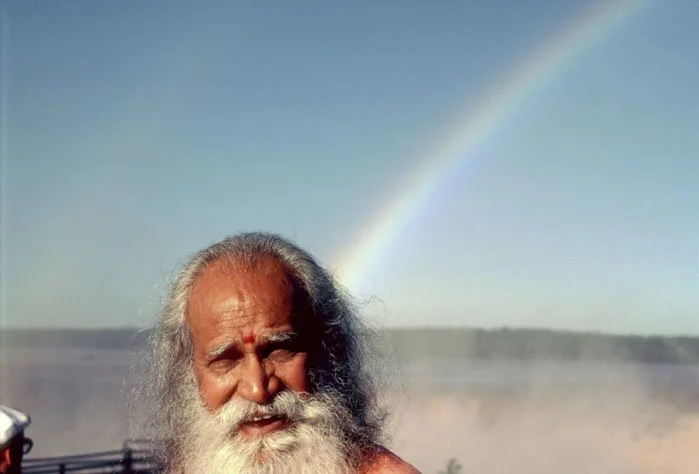
He became my first direct experience of a living guru and of a tradition in which the guru was not simply someone whose books you read or teachings you studied. The guru had a particular role in the spiritual development of the student.
I graduated from teacher training in May.
In August, Swami Satchidananda took mahasamadhi.
I had barely entered this world before the guru through whom I had first experienced it was no longer in the body.
By then I understood something I hadn't understood when I began my training: yoga held the guru as a guide toward Self-realization — someone who had traveled farther along the path and could help illuminate what the student could not yet see.
I found the idea enormously appealing.
Much more appealing than the idea of a pastor had ever been to me.
I never felt yoga was asking me to believe anything.
It felt more like an invitation:
Are you willing to experience this for yourself?
Practice.
Observe.
Pay attention.
See what happens.
That was part of what I found so refreshing about it. I wasn't looking for another belief system. I was looking for direct experience.
And I wanted a guru who was in the body.
I wanted the possibility of an ongoing relationship with a living teacher. Someone I could encounter, learn from, be challenged by and, perhaps most importantly, be seen by.
So I began looking for my guru.
I wasn't looking for someone to tell me what to think. I wasn't looking for another identity.
I was looking for someone who could help me become free.
That is an important distinction in any conversation about gurus, because from outside the tradition it can be easy to look at the devotion surrounding a guru and assume that devotion itself is the point.
It isn't.
The guru is not supposed to become the destination.
The guru is supposed to lead you beyond the need for the guru.
That distinction matters enormously when we talk about the power inherent in the relationship. The guru is given authority precisely because the student accepts that there are things about their own consciousness they cannot yet see clearly. That creates extraordinary potential for transformation.
It also creates extraordinary potential for abuse.
Both things can be true.
I have sat with gurus. I have received teachings and practices from them. I have experienced things in their presence that I cannot reduce to charisma, projection, group psychology, or wishful thinking simply because those explanations are more comfortable to a Western mind.
And I have never understood any of that to require me to stop thinking.
This may be where the conversation about gurus goes wrong.
We tend to be offered two choices: surrender your discernment in the name of devotion, or reject the entire idea of spiritual authority in the name of discernment.
I don't accept either one.
Devotion without discernment is dangerous.
Discernment without openness becomes cynicism.
Neither is consciousness.
That middle ground requires something more difficult than choosing a side. It requires being able to hold spiritual context and ordinary human boundaries at the same time.
You don't have to automatically sexualize something because nudity is involved.
And you don't have to automatically sanctify something because a guru calls it spiritual.
Context matters.
Consent matters.
Truth matters.
A guru who asks you to go beyond the mind is not necessarily asking you to stop thinking.
Those are not the same instruction.
But the moment go beyond the mind becomes a reason you are not allowed to question what you see, something has gone terribly wrong.
The same is true of the body.
Much of yoga asks us to examine our identification with the body. I am not the body does not mean the body is dirty, irrelevant, or available for someone else's use. It means something much more radical: this body is not the totality of what I am.
That teaching can liberate.
It can also be distorted.
A spiritual teacher may genuinely challenge our cultural assumptions about bodies, sexuality, attachment, identity, death, possession, morality, and the self. That is partly what spiritual teachers are for. If they only confirmed everything we already believed, there would be very little point.
But spiritual context cannot become a universal solvent that dissolves consent, accountability, or truth.
And neither should our contemporary frameworks become a universal solvent that dissolves spiritual context.
Both require discernment.
We also take spirituality far too damn seriously.
Not allegations of abuse. Those deserve serious examination.
I mean the enormous solemnity we build around being spiritual. Around teachers. Around practices. Around ourselves as practitioners.
We can become so invested in looking reverent, conscious, evolved, or devoted that we lose the ability to laugh, question, notice absurdity, or admit that human beings remain human beings even when everyone is wearing white and chanting Sanskrit.
A little irreverence can be remarkably clarifying.
Spirituality without self-examination is just another identity.
Open your eyes.
Putting someone on a pedestal doesn't make them more spiritual. Sometimes it just makes them harder to see.
And the fall from the pedestal far harder.
Perhaps that is where our attention belongs.
We keep wanting someone else to tell us what is true.
The guru.
The whistleblower.
The institution.
The journalist.
The former devotee.
The current devotee.
The internet.
Pick your authority.
But changing authorities is not necessarily the same thing as becoming discerning.
I can hear an allegation against someone I revere without immediately defending them.
I can also hear an allegation without immediately believing it.
I can say: I don't know.
There is enormous freedom in those three words.
I don't need Amma to be innocent.
I don't need Sadhguru to be innocent.
I don't need their critics to be wrong.
And I don't need their critics to be right.
I don't need to defend them or explain them.
I want what is true.
If something happened, it happened.
If it didn't, it didn't.
I'm not particularly interested in disappearing down the rabbit hole trying to reach a verdict. I can listen. I can read. I can examine what is presented to me.
And none of it changes what I have personally experienced with those same teachers.
My devotion has no authority over reality.
Neither does someone else's outrage.
And whatever I have genuinely experienced remains mine to examine too.
Perhaps what deserves deeper examination is not that we trust a guru, but what happens to us inside that trust.
Do we become more capable of seeing, or less?
More free, or more dependent?
More willing to examine ourselves, or more willing to explain away what makes us uncomfortable?
Does devotion deepen discernment, or replace it?
Because if the purpose of the guru is liberation, then the relationship should ultimately move us toward freedom.
Not away from it.
A guru is meant to lead us from darkness to light.
The relationship should not require us to close our eyes.