
Mysterium Tremendum: Sometimes Awe Has Teeth
There are experiences of the sacred that soothe us.
And then there are the ones that undo us.
The German theologian Rudolf Otto used the phrase mysterium tremendum et fascinans to describe an encounter with the Divine that is at once mysterious, overwhelming, terrifying, and irresistibly compelling.
Not comforting.
Not easily understood.
Not something you neatly integrate over a weekend and return from unchanged.
It is the experience of standing before something so vast that the structures you normally use to understand yourself and the world suddenly become very small.
You know almost nothing.
You control almost nothing.
And somehow, in the middle of that, you may feel more alive than you have ever felt.
The Sacred Is Not Always Gentle
We like spirituality when it reassures us.
When it tells us we are loved.
When meditation calms the mind.
When prayer brings comfort.
When the universe appears to confirm that everything is unfolding exactly as it should.
But encounters with the sacred are not always reassuring.
Sometimes they are destabilizing.
Sometimes the experience is so large that the nervous system trembles under it.
Sometimes beauty becomes almost unbearable.
Sometimes you stand in front of a mountain, a deity, a teacher, a river, a night sky, a death, a birth, or some inexplicable moment of grace and realize that whatever you thought reality was, it is much bigger than that.
And for a moment, perhaps longer, the person you thought you were cannot contain it.
That is closer to mysterium tremendum.
The mystery.
The trembling.
And the strange fascination that makes us move toward what simultaneously overwhelms us.
When Knowing Falls Apart
One of the most profound things about genuine spiritual experience is that it can destroy certainty.
Not truth.
Certainty.
There is a difference.
Certainty belongs largely to the mind. It organizes, categorizes, explains, predicts.
But there are moments when explanation becomes inadequate.
You encounter something you cannot think your way around.
You know something happened.
You may even know that it was sacred.
But you cannot reduce it to language without diminishing it.
Anyone who has had a profound mystical experience knows this frustration.
You try to tell someone.
The words sound ridiculous.
The experience was enormous; the description sounds small.
Eventually you may stop trying.
Some things are understood only by being lived.
Being Cracked Open
We often use the phrase cracked open casually.
But being cracked open is not necessarily pleasant.
Something that has been holding your identity together breaks.
A certainty disappears.
A belief no longer works.
The illusion of control becomes impossible to maintain.
And suddenly there is space where the old structure used to be.
That space can feel terrifying.
It can also feel sacred.
Because what breaks is not always what is true.
Sometimes what breaks is what prevented us from seeing what is true.
This is why profound spiritual experience can feel simultaneously like destruction and revelation.
Something is ending.
Something is being revealed.
And for a while, we may not know which is which.
The Divine Does Not Always Arrive as Bliss
Sometimes the sacred arrives through beauty.
Sometimes through devotion.
Sometimes through silence.
And sometimes through grief.
Through death.
Through illness.
Through a life changing in a way we never consented to.
Through standing somewhere we suddenly understand we cannot remain.
Through losing the person, identity, relationship, belief, or future around which we had organized ourselves.
I am increasingly suspicious of spiritual language that insists every encounter with the Divine should feel peaceful.
Some of the most sacred moments of a human life leave us shaking.
They humble us precisely because they remind us how little control we actually possess.
And yet there can be something strangely beautiful inside that humility.
Not because suffering itself is holy.
But because the collapse of certainty can create an opening through which something much larger becomes visible.
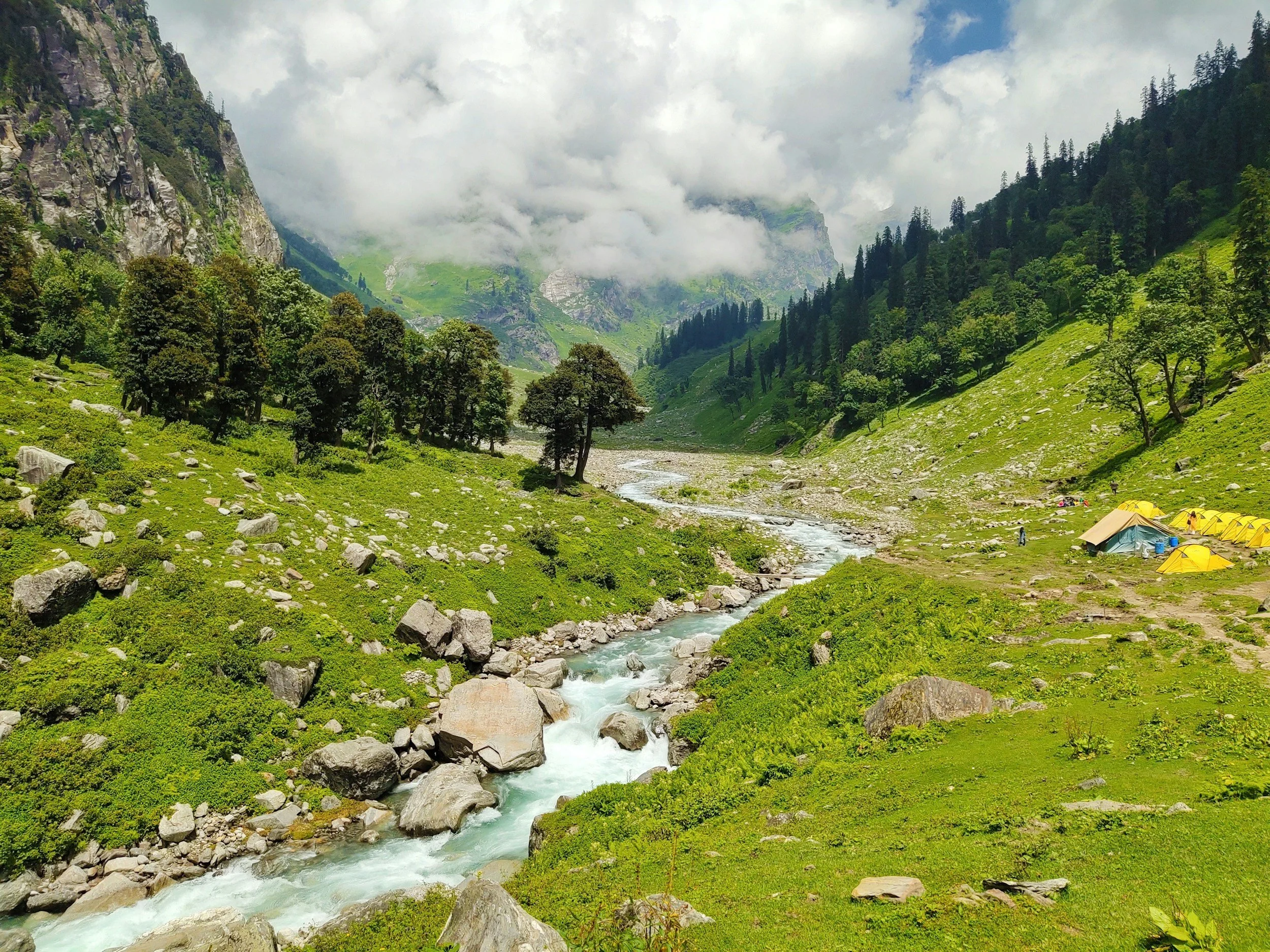
Awe Has Teeth
I have been thinking about Nepal.
Before the flood, there were people gathered at the immigration center, many of them there because they were on pilgrimage.
That matters to me.
Pilgrimage is an intentional movement toward the sacred. People leave home. They travel difficult roads. They enter landscapes that have been revered for centuries. They go looking for something — blessing, darshan, purification, devotion, God.
And all around them are the Himalayas.
There are few landscapes capable of making the human being feel smaller so quickly.
The scale alone is overwhelming.
The mountains are breathtakingly beautiful. They are also completely indifferent to our sense of security.
And then the water came.
The same natural world capable of producing overwhelming beauty revealed overwhelming force.
Whole families were gone in moments.
Homes disappeared.
Roads disappeared.
People were buried beneath rubble and debris.
The landscape that inspires pilgrimage became terrifying.
That is also awe.
We tend to use the word awe as though it means something beautiful enough to photograph.
But awe is not merely beauty.
Awe has teeth.
It contains the recognition that we are standing before something whose power exceeds us completely.
The river does not ask whether we are ready.
The mountain does not negotiate.
The earth does not require our understanding.
There is something profoundly humbling in that.
And terrifying.
Mysterium tremendum contains both.
The fascination that draws us toward the Himalayas.
And the trembling that comes when we remember what those mountains, rivers, storms, and forces of nature actually are.
We want the sacred to astonish us.
We are less comfortable when it reminds us how fragile we are.
The Scale of the Human
Perhaps this is one reason places of pilgrimage affect us so deeply.
They rearrange proportion.
We arrive carrying the enormous importance of our personal lives — the conflict, the plans, the disappointments, the things we are convinced must happen.
And then we stand beside a mountain that has been forming for millions of years.
Or beside a river that can change the shape of a landscape overnight.
Suddenly the human scale becomes visible.
Not meaningless.
Small.
There is a difference.
Our lives matter enormously to us and to one another.
And we are still part of something incomprehensibly larger.
Both are true.
That recognition can bring tremendous peace.
It can also bring terror.
What Do We Do With an Experience Like This?
Perhaps less than we think.
We do not always need to turn sacred experience into a lesson.
We do not need to immediately explain it.
We do not need to post five things it taught us.
We do not even need to understand it.
Some experiences need silence around them.
Some need years.
Some continue unfolding long after the moment itself has passed.
The mind wants to capture what happened because capture creates the illusion of control.
But mystery does not cooperate.
Maybe the invitation is simply to let the experience remain larger than our explanation of it.
To allow awe to humble us.
To allow grief to be grief.
To allow what has been broken open to remain open for a while.
To resist immediately rebuilding the same walls.
There Is No Going Back
A genuine encounter with the numinous changes the scale by which you measure things.
You may return to ordinary life.
You make dinner.
Answer messages.
Pay bills.
Walk the dog.
Nothing outwardly dramatic may remain.
And yet something in you knows.
Reality is larger than you thought.
You are smaller than you thought.
And somehow you belong to all of it.
That knowledge does not necessarily make life easier.
But it can make life sacred.
Mysterium tremendum is not merely the moment when the Divine comforts us.
Sometimes it is the moment when the Divine becomes so vast that the person we have been can no longer remain entirely intact.
We tremble.
We bow.
We grieve.
We do not understand.
And still, something in us moves closer.